
Eden Park: Origins and Role in Cincinnati’s Development
Long before Eden Park became one of Cincinnati’s most celebrated green spaces, the hillside overlooking the Ohio River served a far more utilitarian purpose. The land that now hosts art museums, botanical gardens, and sweeping city views was originally the site of Mount Ida, a private estate owned by Nicholas Longworth — one of 19th-century Ohio’s most prominent landowners and viticulturists. Longworth cultivated Catawba grapes across these slopes, helping to briefly establish Cincinnati as a national center of wine production before disease devastated the regional crop.
When the Cincinnati Water Works acquired the property in 1845 to construct a reservoir, the hilltop’s elevation made it ideal for gravity-fed water distribution across the growing city below. That practical origin set the stage for a transformation that would shape Cincinnati’s civic and cultural identity for generations.
From Water Infrastructure to Public Greenspace
The shift from reservoir to public park began in earnest after the Civil War, when American cities increasingly embraced the City Beautiful movement — an urban planning philosophy that emphasized parks, civic monuments, and formal landscapes as tools for improving public life. Cincinnati’s park commissioners, influenced by the work of landscape architect Frederick Law Olmsted, began developing the reservoir grounds into a designed landscape in the 1870s.
The city formally dedicated Eden Park in 1894, named in part as a tribute to Longworth’s original estate, which local residents had informally called “Eden.” The park’s opening coincided with a broader civic investment in public recreation, positioning Cincinnati as a city that valued green space amid rapid industrial growth. By the turn of the 20th century, Eden Park had become the anchor of Cincinnati’s park system, a role it maintains today.
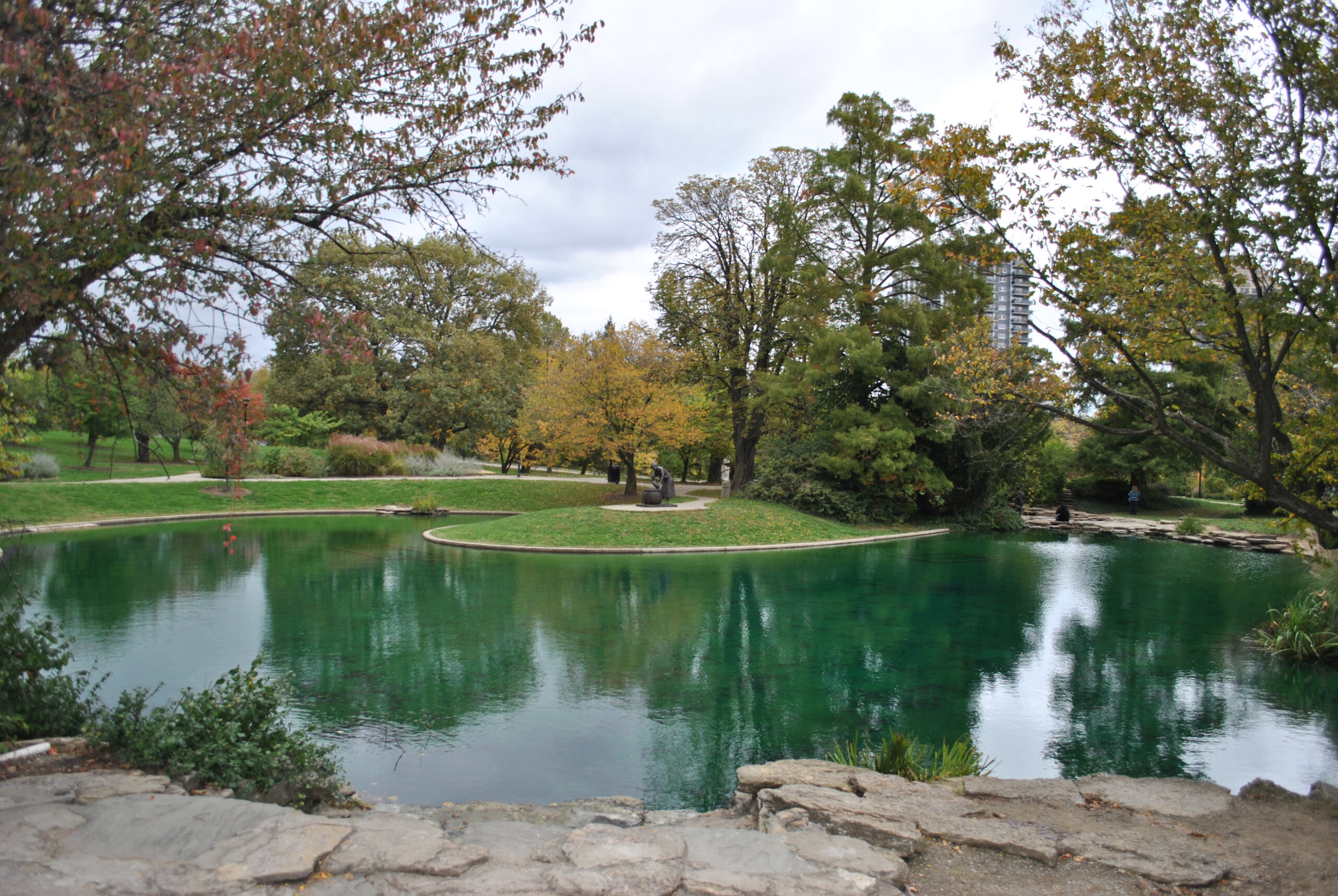
Image Credit: By Joe D. Good, CC BY-SA 4.0, via Wikimedia Commons
Key Institutions That Shaped the Park’s Identity
Eden Park’s development as a cultural destination unfolded across several decades, driven by the establishment of institutions that drew residents from across the region.
The Cincinnati Art Museum, founded in 1881, was one of the first art museums west of the Allegheny Mountains to offer free general admission. Its permanent collection grew to include more than 67,000 works spanning 6,000 years of history, making it a significant cultural institution not only for Cincinnati but for the entire Ohio Valley region. The museum’s hilltop location within the park reinforced Eden Park’s reputation as a destination for both recreation and education.
The Cincinnati Playhouse in the Park followed in 1960, establishing a professional regional theater that would go on to win multiple Tony Awards for Outstanding Regional Theatre. Its presence within Eden Park helped cement the park’s role as a center for the arts in southwestern Ohio.
The Cincinnati Art Academy, founded in 1869 and originally affiliated with the Cincinnati Art Museum, further tied the park to Cincinnati’s creative heritage — a lineage that continues to influence the city’s arts scene today.
The Mirror Lake, Twin Lakes, and Landscape Design
Eden Park’s physical landscape reflects the design sensibilities of the late 19th century, when naturalistic park planning sought to balance formal elements with organic scenery. Twin Lakes, formed from the original reservoir infrastructure, became the visual and recreational centerpiece of the park. Mirror Lake, a smaller ornamental pond near the park’s upper reaches, was designed to reflect the surrounding treeline — a deliberate aesthetic choice typical of Olmsted-influenced design.
Cincinnati’s humid continental climate, characterized by warm summers, cold winters, and an annual average precipitation of approximately 42 inches according to the National Weather Service, shapes how Eden Park’s landscapes look and function across seasons. Deciduous hardwoods — including oak, maple, and tulip poplar species native to the Ohio Valley — dominate the park’s tree canopy, producing dramatic autumn foliage that draws visitors each October. Spring brings flowering dogwood and redbud, both native to the region, creating a seasonal rhythm that reflects the ecological character of southwestern Ohio.
Eden Park’s Role in Cincinnati’s Urban Development
Beyond its cultural institutions, Eden Park played a structural role in how Cincinnati’s eastern neighborhoods developed. The park served as a green buffer between the densely settled Over-the-Rhine district to the west and the residential hilltop neighborhoods of Mount Lookout, Hyde Park, and Mount Adams — the last of which borders the park directly.
Mount Adams, now one of Cincinnati’s most densely populated hilltop neighborhoods, developed in large part because of its proximity to Eden Park. The combination of elevated views, park access, and cultural amenities made the surrounding streets desirable for residential development throughout the late 19th and early 20th centuries. Real estate patterns in Cincinnati’s east side still reflect this legacy.
The park also anchors a connected green corridor that includes the Cincinnati Zoo & Botanical Garden to the north, Burnet Woods, and a series of smaller neighborhood parks — demonstrating how early decisions about public land use shaped the city’s long-term urban form. This green network supports biodiversity, manages stormwater runoff across Cincinnati’s famously hilly terrain, and provides recreational access to communities across Hamilton County.
Image Credit: TimBray, CC BY-SA 4.0, via Wikimedia Commons

Hinkle Magnolia Garden and Botanical Collections
One of Eden Park’s lesser-known features is the Hinkle Magnolia Garden, established in the early 20th century and home to one of the most significant magnolia collections in the eastern United States. The garden’s planting selection was carefully adapted to Cincinnati’s climate zone — USDA Hardiness Zone 6b — which allows for a broader range of magnolia species than would survive further north in Ohio.
The Cincinnati Park Board, which has managed Eden Park since the late 19th century, maintains the park’s botanical plantings in alignment with regional horticultural practices. The board’s stewardship reflects an ongoing commitment to preserving both the designed landscape and the ecological functions the park provides — including tree canopy cover, which helps mitigate the urban heat island effect that affects dense neighborhoods in Hamilton County.
Eden Park Today
Eden Park remains one of the most visited public spaces in Cincinnati, drawing an estimated one million visitors annually. Its 186 acres encompass art, theater, botanical collections, scenic overlooks, walking trails, and active recreation areas — a range of uses that reflects the park’s evolution from a utilitarian reservoir to a multifunctional civic landscape.
The park’s history illustrates a broader truth about American urban greenspaces: decisions made in the mid-19th century about land use, infrastructure, and public amenity continue to shape how cities like Cincinnati function and feel more than 150 years later. For residents of southwestern Ohio, Eden Park is not simply a place to spend a weekend afternoon — it is a physical record of how the city chose to invest in itself.