

Common Ohio Lawn Weeds and How to Identify Them
Every weed in an Ohio lawn is one of three things: a broadleaf, a grassy weed, or a sedge. Get the group right and you are most of the way to knowing what it is and what will move it. Get it wrong and you can spray all season without touching the plant.
There is a second thing worth knowing before the list. Weeds are not random. Each one is suited to a particular condition, so a weed that keeps returning is telling you something about the soil under it. That is the part most identification guides leave out, and it is the part that stops the same weed coming back next year.
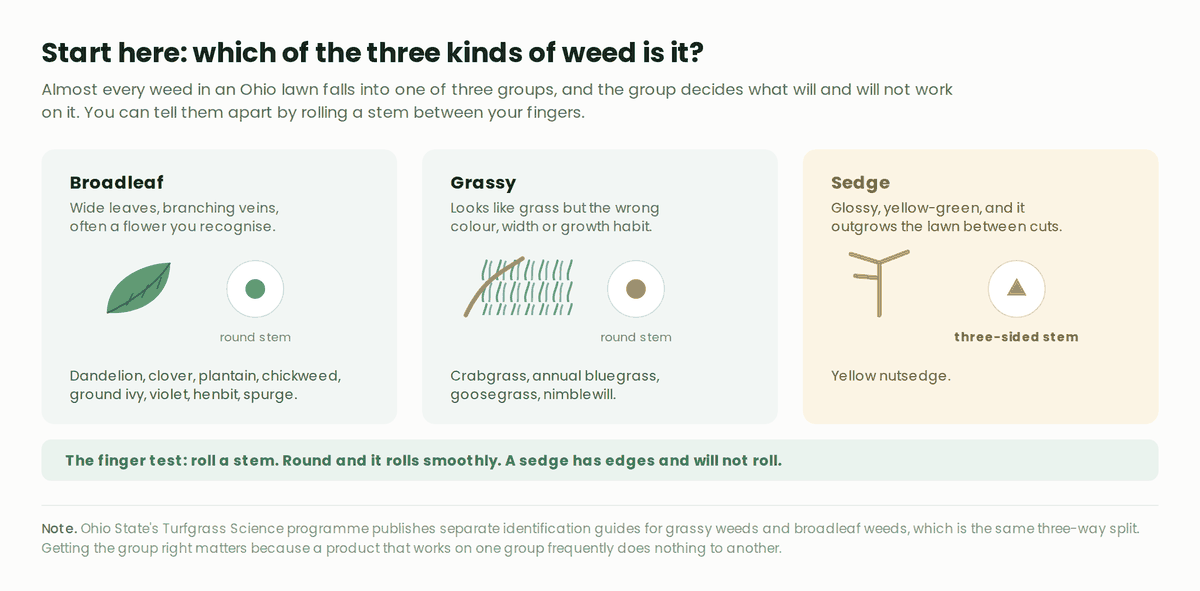
Start with the group, not the name
Broadleaf weeds have wide leaves with branching veins and usually a flower you would recognise. Dandelion, clover, plantain, chickweed, ground ivy, violet, henbit, spurge.
Grassy weeds look like grass but the colour, blade width or growth habit is wrong. Crabgrass, annual bluegrass, goosegrass, nimblewill. These are the hardest to spot early, because at a glance they are just lawn.
Sedges are their own thing. Glossy, yellow-green, three leaves radiating from a triangular stem, and they grow visibly faster than the turf between cuts. In this region that means yellow nutsedge, and it is the one people most often mistake for a grass.
The reason the group matters is practical. Ohio State’s turfgrass programme publishes separate identification guides for grassy and broadleaf weeds for exactly this reason. A product formulated for broadleaf weeds will leave nutsedge and crabgrass untouched, and people spend whole seasons discovering that.
When it appeared is half the answer
A plant that comes up in October and disappears in June is a winter annual. One that shows up in late May and dies at the first hard frost is a summer annual. One that is there every year in the same spot is a perennial, and it does not start over from seed, which is why it is harder to shift.
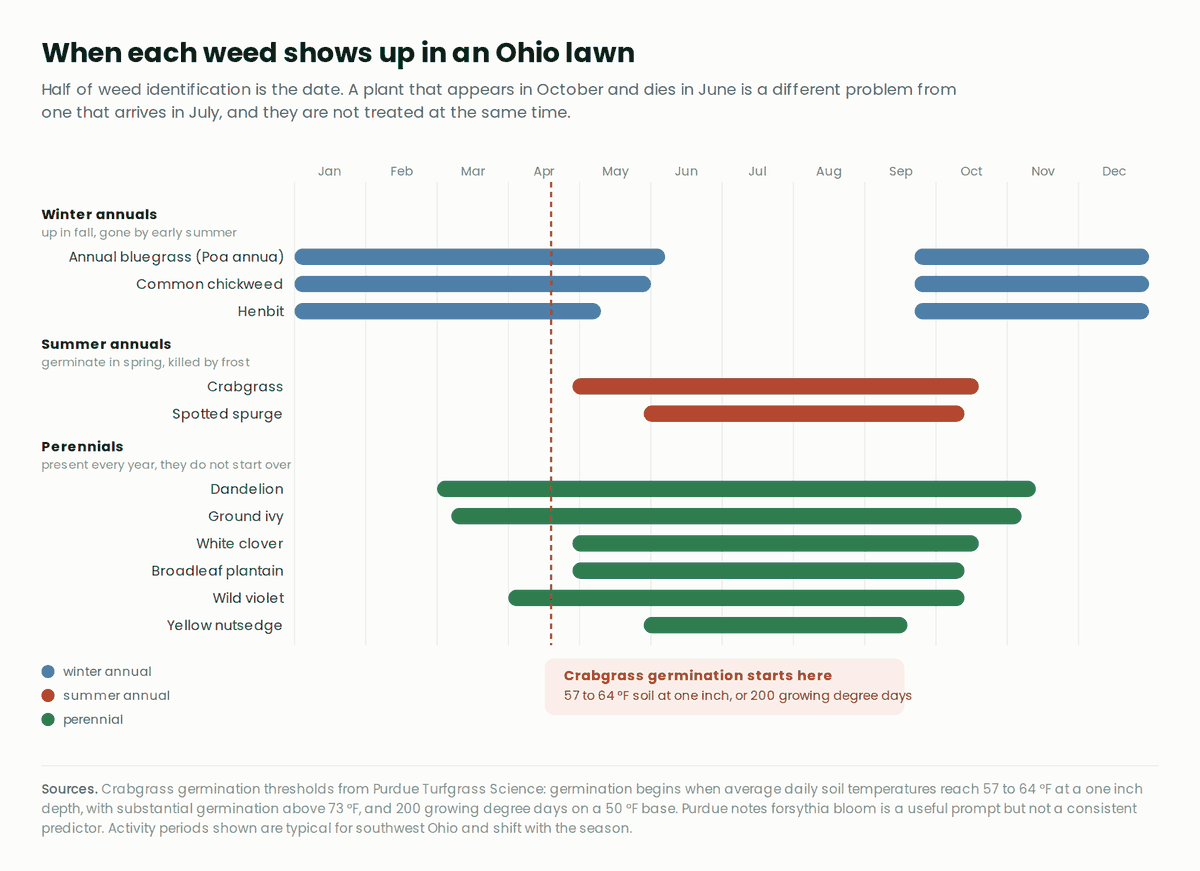
The crabgrass line on that chart is worth pausing on. Purdue Turfgrass Science reports that germination begins when average daily soil temperatures reach 57 to 64 °F at a one inch depth, with substantial germination once soil passes 73 °F, and that 200 growing degree days on a 50 °F base is the working threshold. Forsythia in bloom is the traditional cue, and Purdue is careful to say it is a prompt rather than a reliable predictor. We cover when the pre-emergent actually needs to go down separately, because being two weeks late is the same as not applying it, and how the application itself works is worth understanding before you buy anything.
The weeds you will actually see here
Jump to a weed
Crabgrass
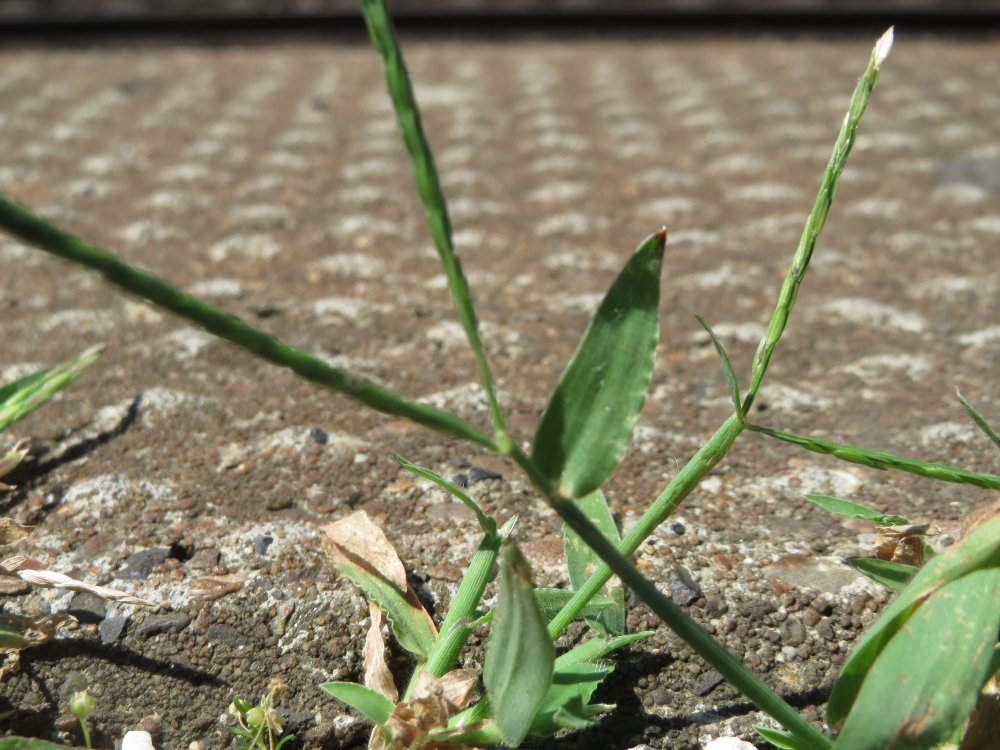
A summer annual that grows flat and outward from a central point, with blades noticeably wider and lighter than the surrounding turf. It appears in the thinnest, hottest, driest parts of the lawn first, which is usually along driveways and sidewalks. It dies at the first hard frost regardless of what you do, but each plant has already dropped seed. Prevention is a spring job, not a summer one, and we have written about keeping it out of the lawn in more detail.
Yellow nutsedge
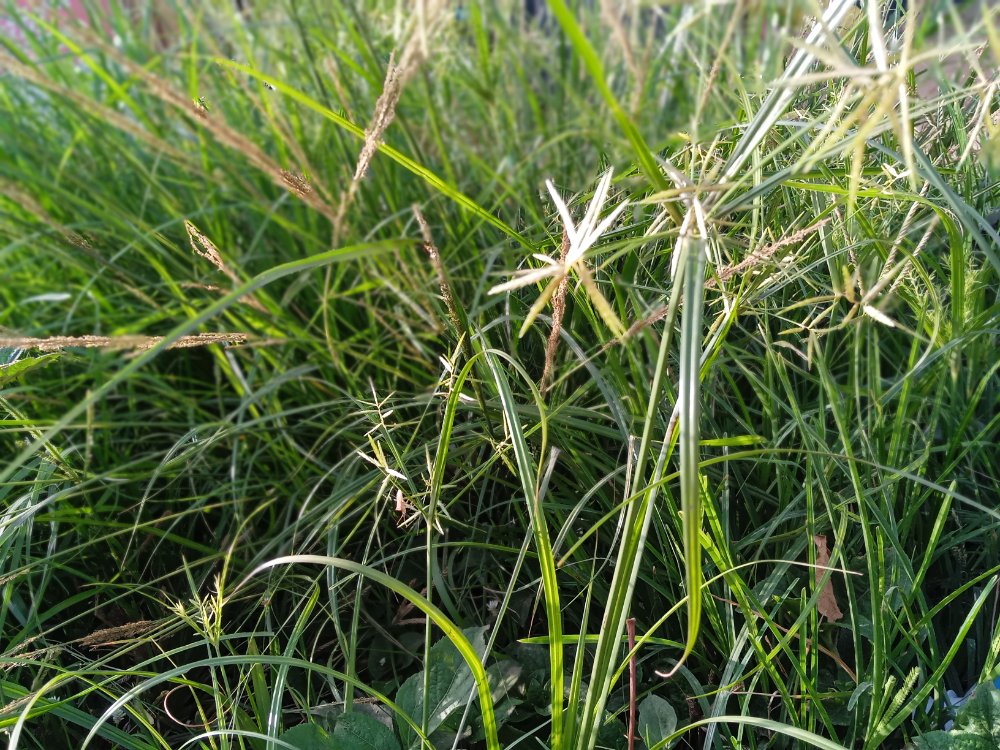
Not a grass. Glossy yellow-green, leaves in sets of three, and a stem that is triangular in cross section. The giveaway is speed: three or four days after mowing it stands above everything around it. It grows from underground tubers, so pulling it usually leaves the tubers behind and produces more plants than you started with. It reliably signals ground that stays wet.
Annual bluegrass, Poa annua
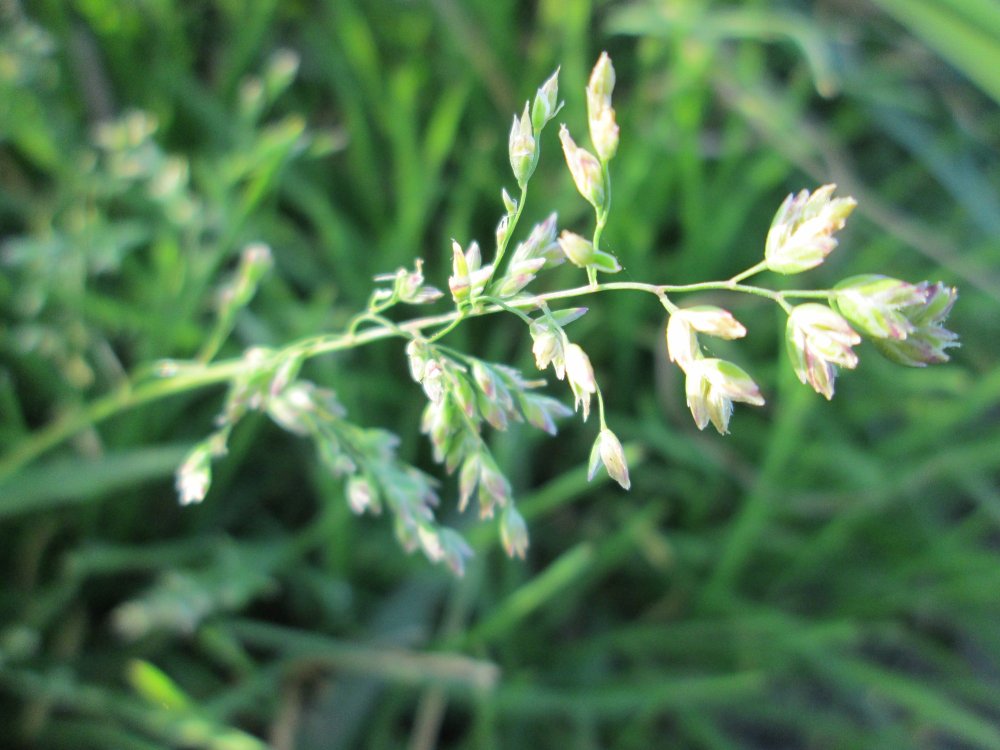
A winter annual that looks like fine turf until it does two things: it turns a paler apple green than the lawn around it in spring, and it produces whitish seedheads even when mowed short. It thrives on compaction, moisture and shade all at once, which describes most lawns along a walked path.
Dandelion
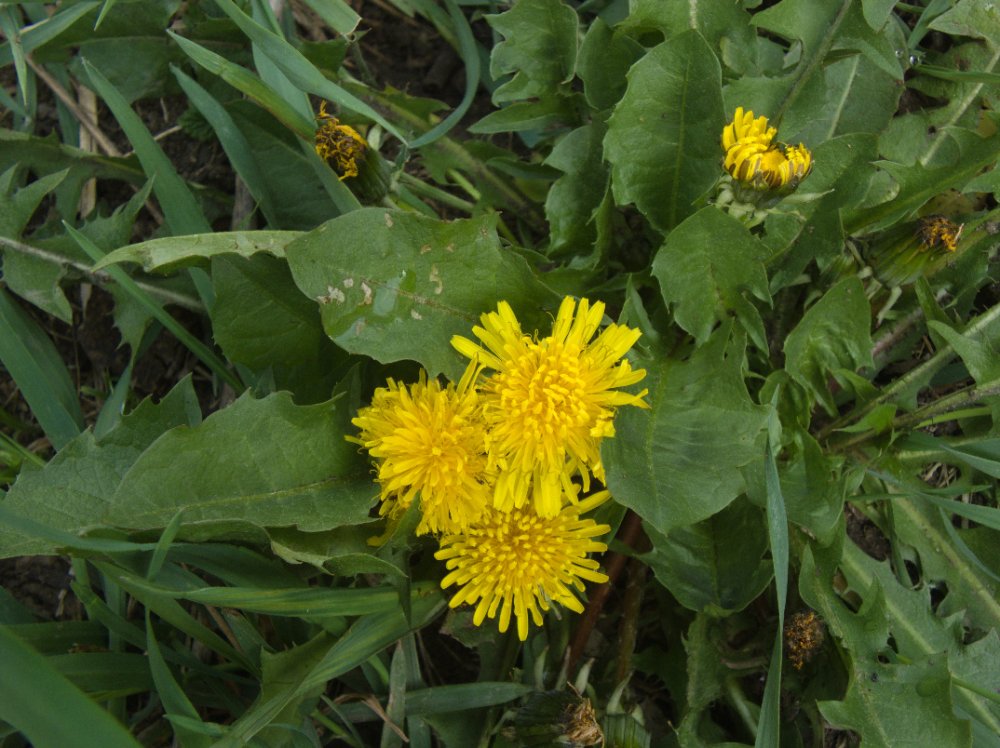
Nobody needs help identifying the flower. What matters is the rosette of jagged leaves flat to the ground and the thick taproot under it, which is why breaking the top off achieves nothing. Dandelion is on the compaction list. If you have a lot of it, the soil is likely tight rather than merely fertile. There are other yellow flowers that get mistaken for it in spring, including lesser celandine, which is a genuinely different problem.
White clover
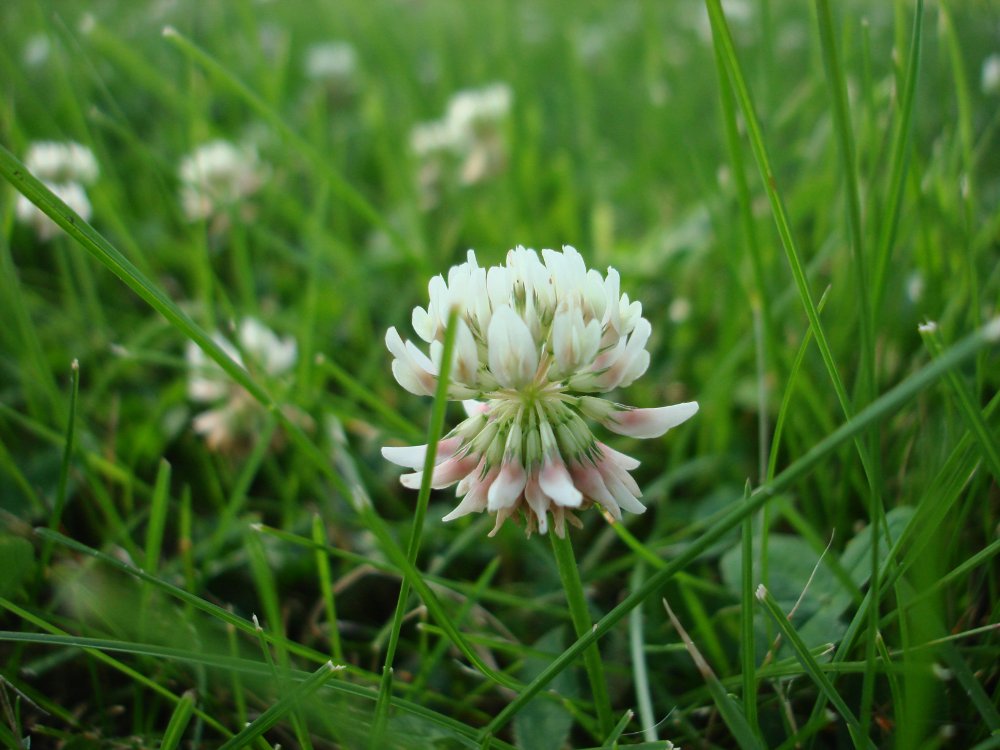
Three rounded leaflets, often with a pale crescent marking, and small white flowerheads that bees work heavily. Clover fixes its own nitrogen, which is why it thrives where the lawn is underfed and outcompetes thin turf. Ohio State’s guidance on organic lawn care makes the point directly: in an organically managed lawn you may want to rethink the definition of a weed, since clover contributes nitrogen. Whether it stays is a preference, not an agronomic emergency. Those small white flowers are worth a closer look before you decide.
Ground ivy, also called creeping Charlie
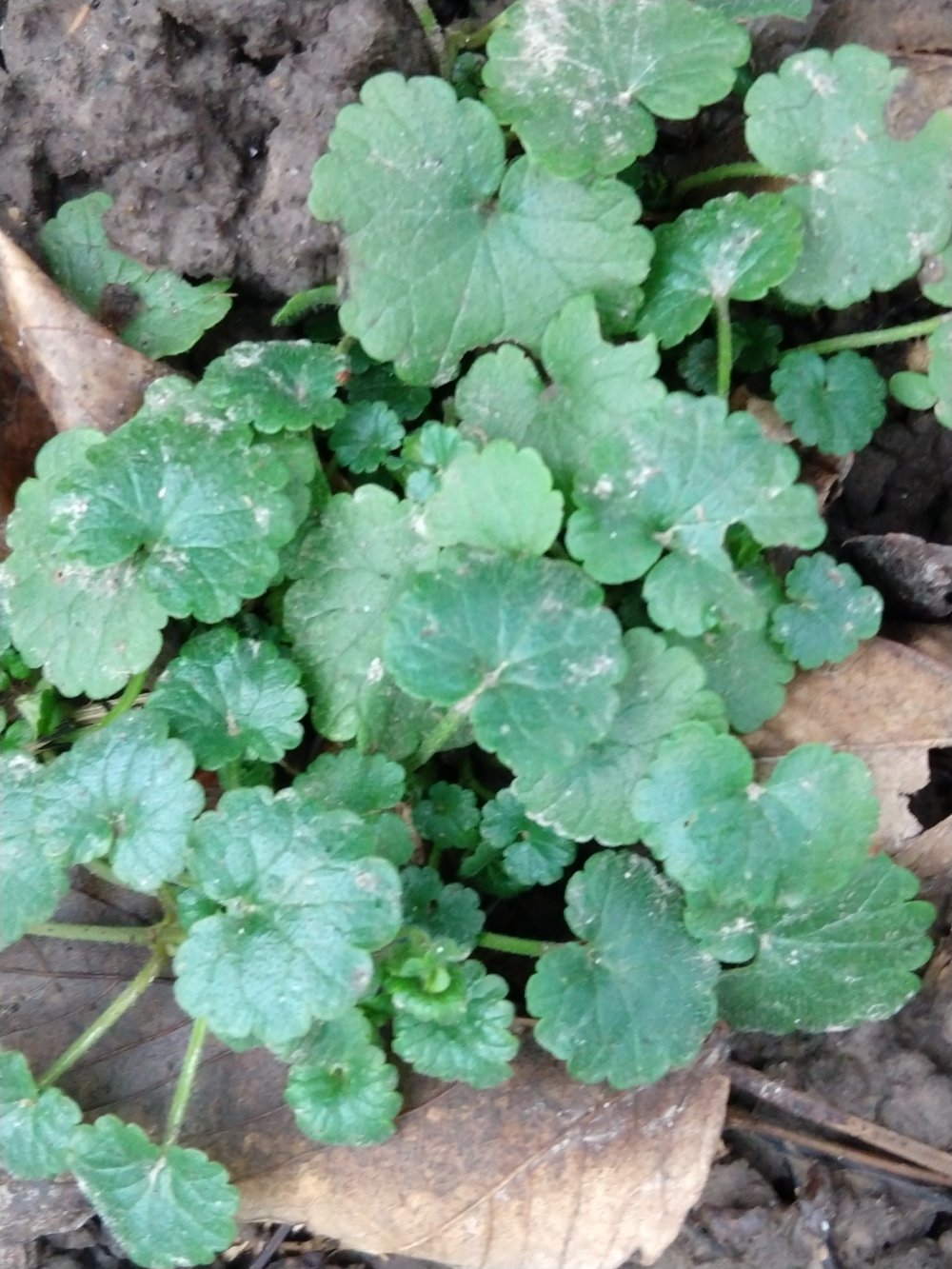
Scalloped round leaves on a creeping square stem, with small purple flowers in spring, and a distinct minty smell when crushed. It roots at every node, so it spreads sideways under the mower and any fragment left behind restarts it. It is a shade plant. Where it dominates, the honest answer is often a tree problem rather than a weed problem.
Broadleaf plantain
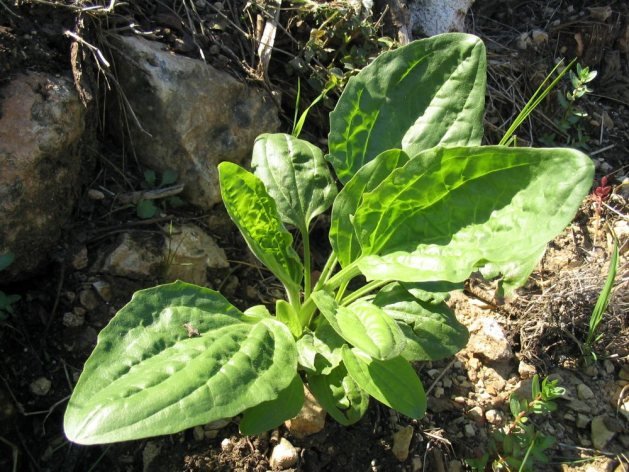
An oval leaf with strong parallel veins running lengthwise, growing in a flat rosette, with a seed spike like a rat tail. It appears along paths and edges because it tolerates compaction that turf cannot. It is on four of the six condition lists, which makes it one of the more informative weeds in a lawn.
Common chickweed
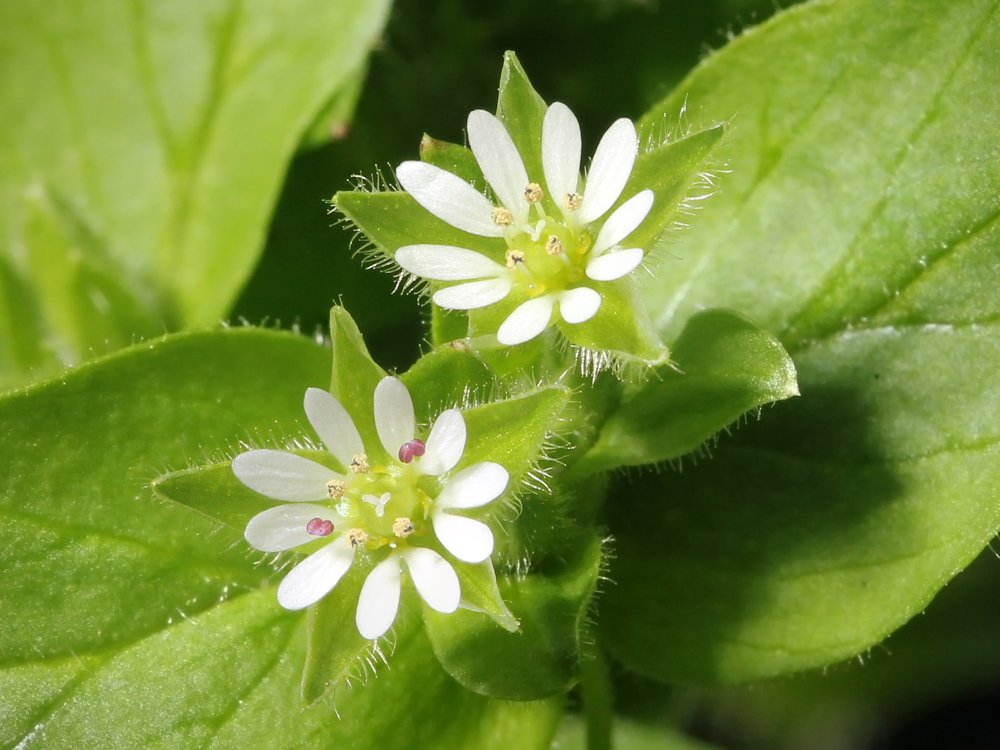
Small pointed oval leaves on trailing stems, tiny white star-shaped flowers, and a single line of fine hairs running along one side of the stem, which is the detail that separates it from lookalikes. A winter annual that prefers cool, damp, shaded ground.
Henbit
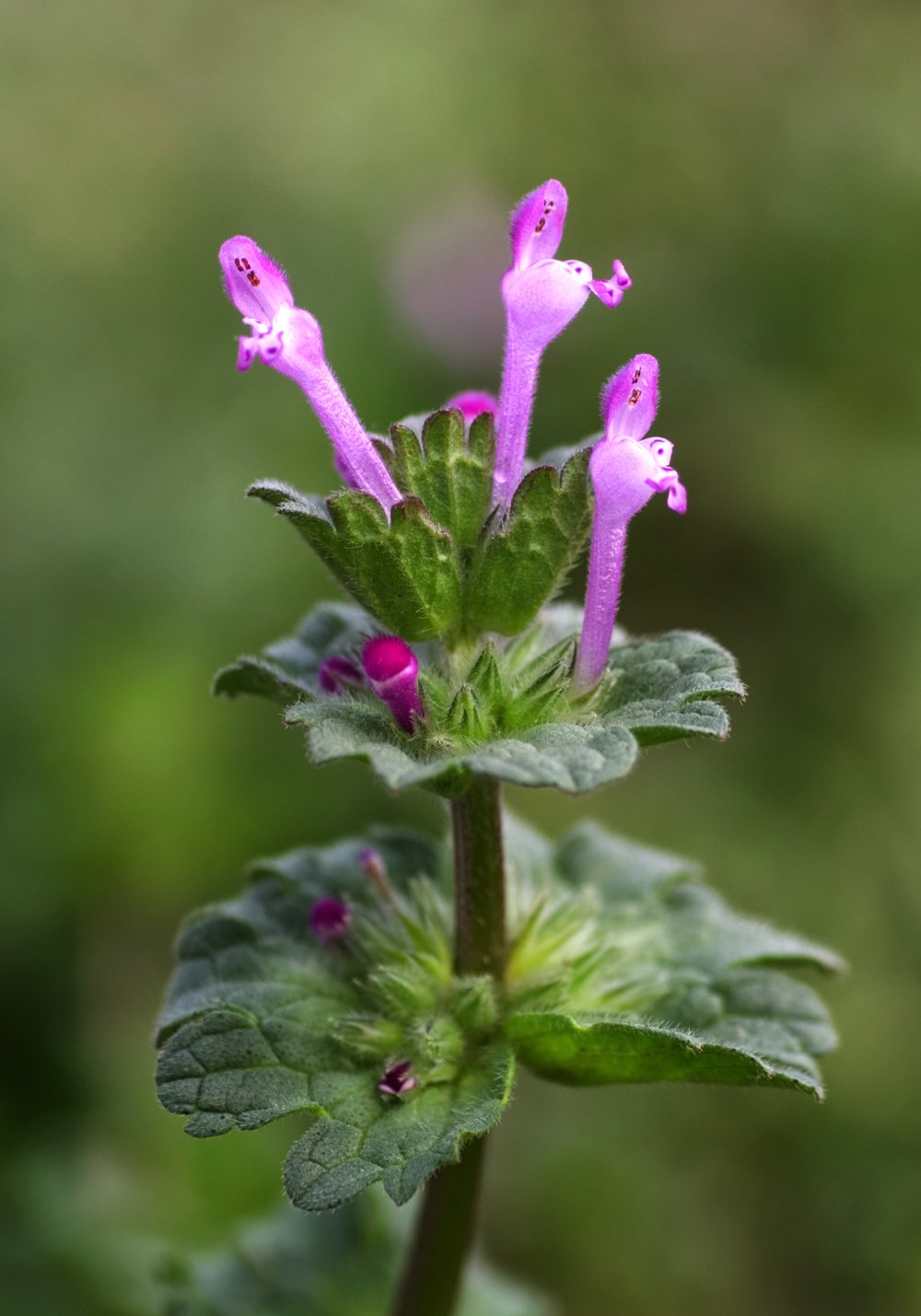
Upright square stems with scalloped leaves that clasp the stem in rings, and purple flowers in early spring. Often the first colour in a thin lawn in March. A winter annual, so by the time it is obvious it is nearly finished, and the useful response is autumn thickening rather than a spring spray.
Spotted spurge
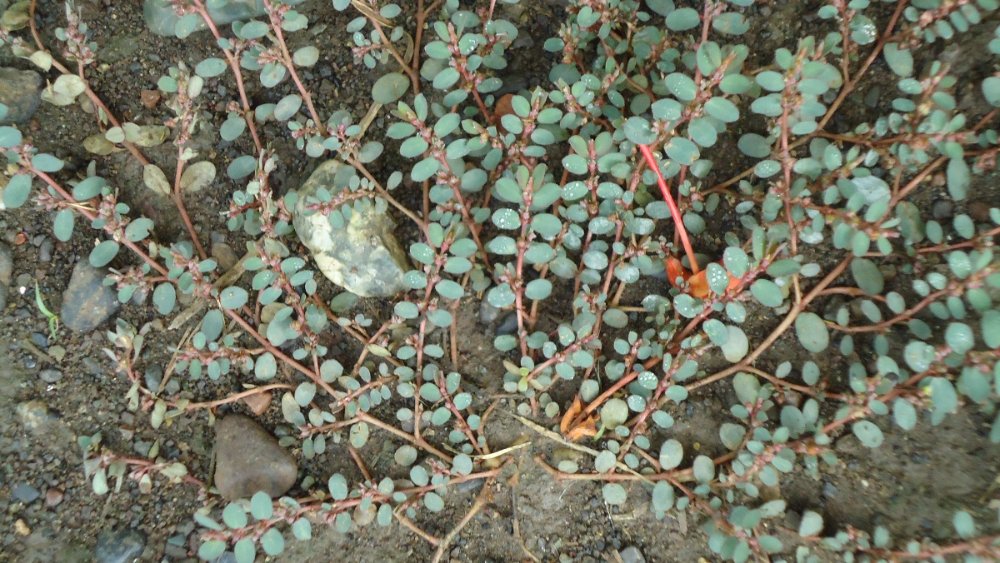
Flat, mat-forming, with small oval leaves that usually carry a dark red spot, and a milky sap when a stem is snapped. That sap is the reliable test. It colonises hot bare ground and thin edges, and it is a marker for both compaction and drought stress.
Wild violet
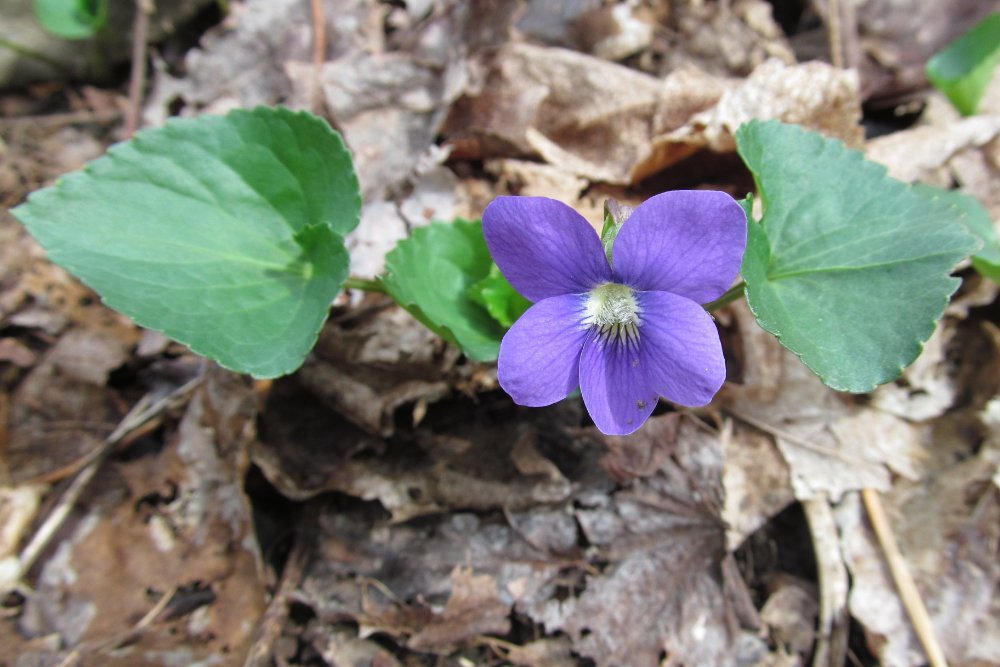
Heart-shaped leaves with a waxy surface and purple flowers in spring, spreading by underground rhizomes. The waxy leaf is why it shrugs off applications that clear everything else, and it is the weed most likely to still be there after two seasons of effort. It indicates shade.
Nimblewill
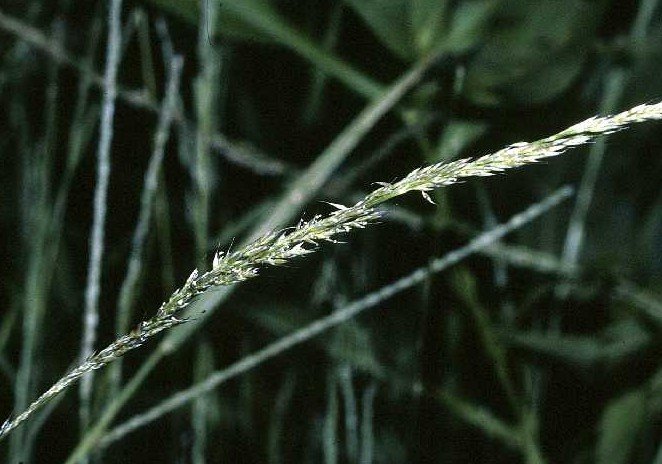
A fine-bladed perennial grass that stays a distinct blue-green through summer and then turns straw brown well before the lawn does, leaving obvious patches in autumn. It spreads by above-ground stolons. It also indicates shade, and we have covered nimblewill in Cincinnati and Dayton lawns in its own post because it causes more confusion than any other grassy weed here.
What the weed is telling you about the lawn
This is the part worth acting on. Kill the plant and leave the condition, and the same weed returns on the same schedule.
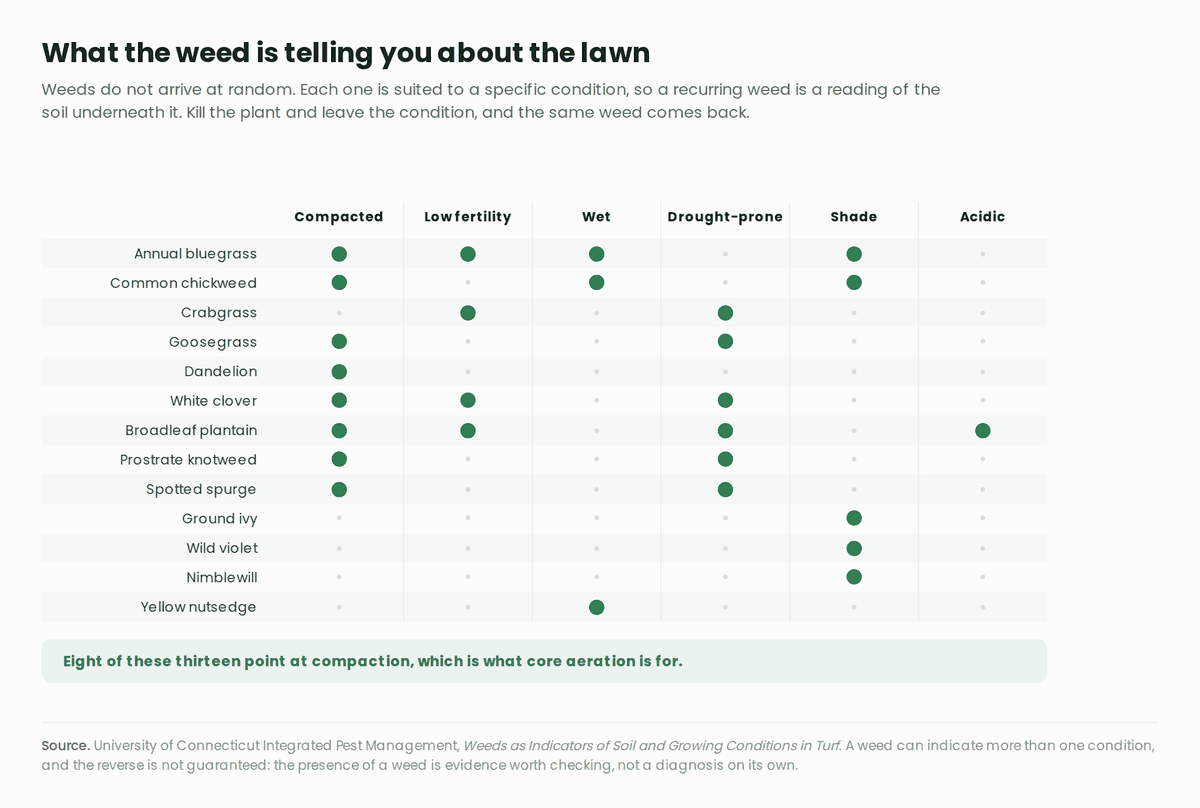
Read down the compaction column. Eight of the thirteen weeds on that chart are associated with compacted soil, which is the single most common finding in a southwest Ohio lawn, particularly on graded subdivision lots where the topsoil was stripped during construction and the subsoil driven over. That is a mechanical problem, and core aeration in the right window is what addresses it. No herbicide does.
Read the shade column and the answer is usually pruning or accepting a different result under the tree. Read the low fertility column and the answer is a feeding programme. Read acidic and the answer starts with a soil test rather than a guess.
A caution on all of this. A weed can indicate more than one condition, and the presence of one weed is evidence worth checking rather than a diagnosis. Three plantain plants near a gate mean people walk there. Plantain across the whole back lawn means something else.
The thing that beats every product
Ohio State’s Ohio-specific guidance is unambiguous about what actually suppresses weeds, and it is not a spray. A dense lawn is the primary defence, because it takes the light and the space that weed seedlings need. Their recommendations for cool season grass in Ohio: mow at 2.5 to 3 inches, since taller grass shades the soil and helps prevent weed seed germination; mow often enough to remove flowers before they set seed; feed more heavily in autumn using slow release products; water deeply and infrequently; and reseed bare spots rather than leaving open ground.
Bare soil is the actual problem. Every weed on this page is opportunistic, and every one of them needs an opening. Our notes on natural weed control and on how corn gluten meal works go further into the organic side of that, and the reasoning behind the whole approach is set out in why we work organically.
When it is worth calling someone
Handle it yourself when it is a handful of dandelions or plantain, the lawn is otherwise thick, and you are willing to dig rather than snap the tops off.
Get help when you are looking at nutsedge or nimblewill, since both are commonly misidentified and commonly treated with products that cannot work on them. Also when a weed covers more than roughly a third of the lawn, because at that point you are not weeding, you are renovating. And when the same weed returns in the same place for a third year, which means the condition was never addressed.
Common questions
What is the most common weed in Ohio lawns?
Crabgrass and dandelion by frequency. Ground ivy and wild violet by difficulty, since both spread vegetatively and neither responds to a single application.
Why do the same weeds come back every year?
Because the condition that suited them is still there. Perennials also return from roots or rhizomes rather than seed, so a top kill does not end them.
Is clover actually a weed?
Only if you decide it is. It fixes nitrogen and supports pollinators, and Ohio State explicitly raises rethinking it in an organically managed lawn. It does indicate the lawn is underfed.
How do I tell nutsedge from grass?
Roll a stem between your fingers. Grass stems are round. Sedge stems have three flat sides and will not roll.
Can I just pull them?
Dandelion and plantain, yes, if you get the whole root. Nutsedge, no, because the tubers stay behind and multiply. Ground ivy, violet and nimblewill, no, because fragments regrow.
Getting an accurate answer for your lawn
Identification from a photo is possible. Identification plus the reason it is there needs someone standing on the lawn looking at how the soil behaves. If you would like that, get in touch, or see what is covered in our lawn treatment programs and the areas we serve.
Sources
- Ohio State University Extension, Natural Organic Lawn Care for Ohio, Ohioline HYG-4031.
- Ohio State University, Buckeye Turf, Turfgrass and Weed Identification guides.
- Purdue University Turfgrass Science, When Will Crabgrass Germinate?
- University of Connecticut Integrated Pest Management, Weeds as Indicators of Soil and Growing Conditions in Turf.