
Winter Lawn Care in Ohio: A Month by Month Checklist for Cincinnati and Dayton
Most winter lawn care in Southwest Ohio happens in November: lower the mower gradually to 2 to 2.5 inches, clear the leaves, and get the late fall feeding down before the ground freezes. December through February is for dormant seeding, understanding why the lawn turns tan, and repairing salt and plow damage, so the lawn is ready when the first spring treatment goes down.
Cool season grasses in Dayton and Cincinnati prefer temperatures between 60 and 80 degrees. As it gets colder, they slow down and go dormant, but what happens to the lawn this winter still shapes how it looks in April.
Jump to: November · December · January · February · Early spring · Checklist · FAQ
November: finish the season
Lower the mower gradually
Mow at 3 to 4 inches all season, then bring the height down over the last couple of mowings to 2 to 2.5 inches going into winter. Do it gradually. Never remove more than a third of the grass blade at once, and do not chop a lawn from 4 inches straight down to 2.
Shorter grass going into winter:
- Reduces snow mold. Long grass lies over and holds moisture, which invites snow mold fungus.
- Reduces matting and rodent damage. Tall grass mats under snow and gives voles and mice cover.
- Greens up more evenly in spring. The lawn is not fighting through matted, dead blades.
- Makes leaf cleanup easier. Leaves do not tangle in long blades.
More detail is in why shorter grass helps a lawn survive winter.
Clear the leaves
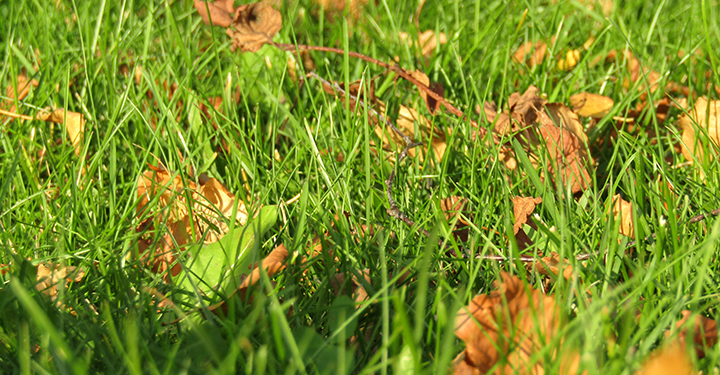
Do not let leaves sit on the grass for long periods or all winter. Like large clumps of grass clippings, a heavy leaf layer smothers healthy grass.
The best way to clean them up is to mulch them into small pieces with the mower. That recycles nutrients and adds organic matter to the soil. If the layer is too heavy for a double cut with a mulching mower, rake it up instead. Should I bag or mow the leaves on my lawn covers the choice.
Get the late fall feeding down
Late fall is the ideal time to fertilize grass. Top growth has slowed, but the plant is sending its energy to the roots and storing carbohydrates for winter. A late fall feeding goes straight to the root system, helps with winter color and gives a quicker spring green up.
Put it down between late October and early December, and never on frozen soil, where it can end up in storm drains and bodies of water. The full reasoning is in late fall lawn fertilizer in Ohio.
Clean and store the mower
After the last mow, clean the mower and sharpen the blade before storing it. A blade should be sharpened at least once a year; a dull blade tears grass instead of cutting it, which leaves it open to disease.
December: last feeding and dormant seeding
- Early December is the end of the feeding window. If the late fall feeding has not gone down yet, it still can, as long as the ground is not frozen.
- Dormant seeding can start. Seed spread while the ground is still freezing and thawing gets pulled into the soil and comes up in spring.
- A tan lawn is normal. Cool season grass turns tan in the cold. It is dormant, not dead.
January: dormant seeding and a dormant lawn
Dormant seeding bare spots
Dormant seeding is the winter way to fix thin areas without a summer of watering.
- Use turf type tall fescue, the grass recommended for Dayton and Cincinnati lawns.
- Mow short and remove debris so seed reaches the soil.
- Spread evenly with a broadcast spreader.
- Rake or roll lightly so seed does not blow or wash away.
- Watch for erosion or pooling water that could move the seed.
The seed comes up once the soil reaches 55 degrees consistently. Do not put crabgrass pre-emergent on those areas in spring, or the seed will not germinate. Winter dormant grass seeding has the full method, and what to do after missing fall seeding compares it with the other options.
Why some patches look different
Most of the lawn will be an even tan. Patches that turn a distinct bright tan from fall through early spring are usually zoysia, a warm season grass that is green from late spring to early fall. Tan patches with a poofy, stringy look are usually nimblewill. Both are fixed by renovating the area in August or September, not in winter. See why is my lawn tan in the winter.
February: salt and plow damage
As snow melts, tan strips along driveways and walks and torn up turf near the street are common. Repairs start as the soil warms in late winter and early spring.
- Clean up plow damage. Rake up torn sod and get rid of it. Sod that is still in good shape can be pushed back in place and may root as the soil warms.
- Treat salt damage. A gypsum or AquaPHix soil amendment helps flush salts out of the soil.
- Repair bare spots. Spread a thin layer of soil over the damage and work seed in with a metal rake or garden weasel. A mix of perennial ryegrass and turf type tall fescue works well: the rye comes up first, and the fescue follows in 10 to 14 days.
- Skip pre-emergent on repaired spots. Crabgrass pre-emergent stops new grass seed from germinating too.
Salt or plow damage to your grass has photos of both.
Early spring: check for snow mold and get ready
- Snow mold shows up as circular straw to grayish brown patches as snow melts, sometimes with pink areas. It looks bad but rarely kills grass. Fluff the matted patches with a rake in early spring so the grass can breathe, and a balanced feeding in early spring helps it recover. More in snow mold fungus on Cincinnati and Dayton lawns.
- Crabgrass pre-emergent needs to go down before the soil reaches 55 degrees consistently, usually by the end of April, except on areas seeded over winter.
- First lawn treatments usually go down in March or April. Anyone changing providers can see what to compare in switching lawn care companies.
The winter lawn care checklist
| Month | Task |
|---|---|
| November | Lower mowing height gradually to 2 to 2.5 inches |
| November | Mulch or rake leaves; do not leave them all winter |
| Late October to early December | Late fall feeding, never on frozen ground |
| After the last mow | Clean the mower and sharpen the blade |
| December to February | Dormant seed thin or bare spots while the ground freezes and thaws |
| January | Expect a tan, dormant lawn; note zoysia or nimblewill patches for late summer renovation |
| February to early spring | Repair salt and plow damage; fluff any snow mold patches |
| March to April | Pre-emergent before 55 degree soil, except on seeded areas; first treatment of the season |
Frequently asked questions
How short should I cut my grass for winter?
Gradually bring it down to 2 to 2.5 inches over the last couple of mowings. Never remove more than a third of the blade at once.
Should I leave leaves on the lawn over winter?
No. Leaves left on the grass can smother and kill it. Mulch them with the mower, or rake them up if the layer is too heavy.
Is it too late to fertilize in December?
Early December still works, as long as the ground is not frozen. Fertilizer on frozen soil can run off into storm drains.
Why is my lawn tan in the winter?
Cool season grasses go dormant in cold weather to protect themselves. A tan lawn in winter is normal and does not mean the grass is dead.
Can I plant grass seed in the winter?
Yes, as a dormant seeding. Freezing and thawing pulls the seed into the soil, and it germinates in spring once the soil reaches 55 degrees consistently.
What is snow mold?
A winter lawn fungus that leaves circular straw to grayish brown patches, sometimes pink, after snow melts. It rarely kills grass. Mowing short before winter helps prevent it.
Start next season with PureLawn
PureLawn finishes every program lawn’s season with a root-boosting late fall feeding, and starts the next one in March or April with crabgrass prevention and the first feeding of the year. Programs can be planned over the winter, so the first treatment goes down on time.
PureLawn’s lawn treatment programs use organic-based fertilizers custom blended for Southwest Ohio soils, with the 100% chemical-free PureGreen program for families who want no pesticides at all. Answers to more seasonal questions are on the common lawn FAQs page.
PureLawn is local and family owned, serving Cincinnati, Dayton and the surrounding cities, including Blue Ash, Madeira, Loveland, Hyde Park, Anderson Township and Tipp City. Get a free lawn quote or call (937) 703-1221. New customers get $25 off their first lawn treatment.