
Your First Year of Organic Lawn Care in Dayton: What to Expect
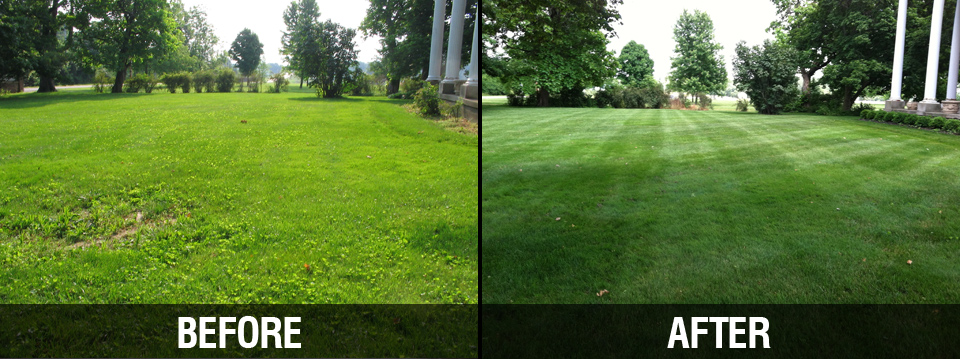
In the first year of organic lawn care in Dayton, color usually improves within a few weeks, while thickness takes longer and usually fills in after a fall aeration and seeding. Growth turns steady instead of surging after each visit, and weeds drop gradually as the turf thickens.
That surprises homeowners used to a quick green flush after every treatment. Here is what changes in year one, why Dayton soil sets the pace, and what each season brings.
Why the first year looks different from a synthetic program
A quick release synthetic fertilizer is used up in a week or two. The lawn greens fast, grows hard, and then often fades before the next visit. That fertilizer mainly feeds the grass blades, not the soil underneath them.
An organic or organic based fertilizer works another way. Soil life breaks the material down and releases nutrients slowly, so the grass grows at a steady pace between visits. The organic matter also improves soil structure over time, which is the part that pays off in year two and beyond. The guide on how organic lawn care works explains the process in more detail.
So the first year is a transition year: the lawn is fed while the soil is rebuilt. Expect steady improvement, not a dramatic change after one visit.
Dayton soil sets the pace
How fast a lawn responds depends on what it grows in, and Dayton area yards vary even on the same street.
Clay that packs down
Many Dayton lawns sit on clay heavy soil. Clay holds nutrients well, but it compacts easily under mowing, foot traffic and pets. Compacted clay limits oxygen to the roots and keeps them shallow, which leaves the grass more exposed to summer heat. Adding organic matter and core aerating are the two main ways to loosen it over time.
Newer neighborhoods with stripped topsoil
Construction and grading often strip the topsoil and leave compacted subsoil behind. This is common in newer neighborhoods around Dayton, including parts of Beavercreek. Grass on that kind of ground struggles to root and thins in summer. Feeding harder does not fix it. Rebuilding soil structure with organic fertilizer, fall aeration and overseeding is a slower but lasting fix, so lawns on new construction lots usually take longer to thicken in year one.
Fast draining ground near the river
Some yards near the river valley sit on sandy, gravelly soil that drains quickly and dries out fast. These lawns compact less, but new seed needs its moisture checked more often.
pH and nutrients
Most Dayton area turfgrass grows best at a soil pH between 6.0 and 7.0. Outside that range, nutrients become harder for the grass to use, even when they are present. Soil tests in this region often show high pH, high magnesium and low potassium, with low organic matter. A soil test in early spring or fall, repeated every 2 to 3 years, shows what a specific lawn needs. The soil testing guide for Dayton lawns covers how to take a sample.
A season by season look at year one
A typical program in this area runs about five controlled release feedings from March to early December. Together they supply roughly 4 to 5 pounds of nitrogen per 1,000 square feet for the year. Treatments usually land about 6 to 8 weeks apart.
March and April: the first application
The first visit usually goes down in March or April and includes crabgrass prevention. It needs to be down before the soil consistently reaches 55 degrees, which is usually by the end of April around Dayton. Organic programs often use corn gluten meal for this step, which also feeds the lawn. Color is usually the first change homeowners notice.
One exception matters here. Any area that was dormant seeded over winter should not get a crabgrass pre-emergent in spring, because it will also stop the new grass seed from sprouting.
Late spring: grub prevention
Grubs do most of their damage in the fall, but prevention goes down in late spring, before they start feeding. By the time brown patches appear, the roots are usually gone and the area needs reseeding. A lawn that had grub damage before is the best candidate for a preventive treatment. The grub and armyworm control page covers the signs to watch for.
Summer: steadier growth and good habits
In summer, the difference from a quick release program is easiest to see. Growth stays even instead of spiking and crashing. Homeowner habits matter a lot this season:
- Mow at 3 to 4 inches and never remove more than a third of the blade at once.
- Leave clippings on the lawn. They return nutrients and organic matter to the soil.
- Water deeply and infrequently, in the early morning. Avoid watering after 3 p.m., since water left on the blades overnight invites disease.
- Plan on about 1 to 2 inches of water a week, rain included, during dry spells.
Deeper roots in better soil help a lawn handle drought, which can mean less summer watering over time. The lawn care tips page covers mowing and watering in more depth.
Late August to October: the biggest jump in thickness
For most lawns, fall aeration and seeding is where year one turns a corner. Core aeration pulls soil plugs 2 to 3 inches deep, which relieves compaction and lets air, water and fertilizer reach the roots. Seed spread over the fresh holes gets direct contact with the soil.
The seeding window runs from late August to about mid October, when soil is still near 60 degrees. Aeration alone can continue through October. Turf type tall fescue is the usual choice for this area, and seed labeled Kentucky 31 or K-31 is best avoided. Quality seed takes 14 to 21 days to sprout with steady watering. New grass should be mowed three times before any weeds in it are spot sprayed. See aeration and overseeding for how the process works.
Late October to early December: the last feeding
The late fall feeding is often called the most important of the year. Top growth slows, but the roots keep growing and store energy for winter. That supports winter color and a faster green up in spring. It should never go on frozen ground. The guide to late fall lawn fertilizer in Ohio explains the timing.
What happens to weeds in the first year
Weeds are the part of year one that takes the most patience. No lawn is ever completely weed free. The best long term defense is thick turf that crowds weeds out, which comes from mowing high and filling in thin areas with new seed.
Corn gluten meal does reduce weeds, but it works best over time. After about three years of applications, it begins to perform close to a chemical pre-emergent. That is why weed control in a fully organic program improves year after year rather than all at once.
Many homeowners make the change gradually. A program can keep spot treatment for weeds at first, treating only the weeds present instead of spraying the whole lawn, and then reduce it as the turf fills in.
Weeds can also point to soil problems:
- Dandelions often suggest low calcium and high magnesium, which is common locally.
- Plantain and knotweed usually point to compaction.
- Chickweed and speedwell tend to show up in bare spring patches, where new seed is the fix.
Hand pulling works well for dandelions. The guide to natural weed control has more options.
Signs the first year is on track
- Color stays even between visits instead of fading before the next one.
- Thin areas fill in after fall aeration and seeding.
- Water soaks in instead of pooling or running off.
- Weed numbers trend down, even if some remain.
- The lawn holds up better in hot, dry stretches.
If the lawn is not improving, the cause is often underground: compaction, pH, or grubs. A soil test and a close look at brown patches usually narrow it down.
How to give next year a head start this winter
November and December are a good time to set up a strong first season:
- Get the late fall feeding down before the ground freezes.
- Gradually lower the mower to 2 to 2.5 inches over the last few mowings.
- Mulch or rake leaves so they do not smother the grass.
- Note any areas that were seeded or will be dormant seeded, so they are skipped for spring pre-emergent.
- Write down any history of grub damage or lawn disease to share with the lawn care provider.
Frequently asked questions
How long does it take for organic lawn care to work?
Color often improves within a few weeks of the first feeding. Thickness takes longer because root growth and soil change happen underground. Most lawns show the biggest jump after a fall aeration and seeding, and results keep building in the second and third years.
Will my lawn have more weeds with organic lawn care?
Weeds can take longer to drop in a fully organic program. Corn gluten meal improves with repeated use and performs close to a chemical pre-emergent after about three years. Mowing high and seeding thin spots speed things up. A gradual switch can keep spot weed treatment at first.
How many times a year should a lawn be fertilized?
Around Dayton, about five controlled release feedings from March to early December work well, supplying 4 to 5 pounds of nitrogen per 1,000 square feet a year. If a lawn gets only one feeding, late fall is the time to do it.
Does organic fertilizer smell?
Organic fertilizers made from food grade, vegetable based ingredients, with no manures, leave no strong scent after application. Manure based products are the ones that tend to smell.
When should lawn care start in spring?
The first application usually goes down in March or April, before soil consistently reaches 55 degrees. That timing lets crabgrass prevention work. Areas that were dormant seeded over winter should skip the pre-emergent so the new seed can sprout.
Organic lawn care for Dayton area homes
PureLawn Organic Lawncare is a local, family owned company, and Matt Maurer runs the Dayton location. Both of our programs include five services a year and feed the soil, not just the grass. PureGreen is 100% pesticide free, so kids and pets can use the lawn as soon as our technician leaves. Bridge uses organic based feedings with spot weed control only where weeds are present. We serve Dayton, Kettering, Beavercreek and nearby communities, and service calls between visits are free.
Compare our lawn treatment programs or request a free lawn quote to get set up before the first spring visit.